The Welsh in Patagonia
This month we discuss the founding of a Welsh-speaking settlement in Patagonia in the mid-19th century. There are also links to selected websites and some suggested reading.
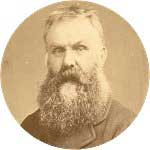
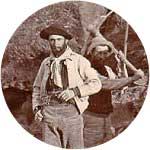
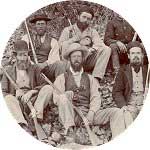
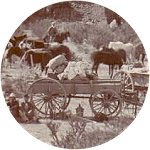
Photos copyright © Bangor University.
In the 19th century some individuals in Wales and the United States were inspired by the idea of establishing a Welsh settlement. Their hope was that the Welsh could live and worship whilst keeping their language and traditions alive, without any external influences.
The Rev. Michael D. Jones, a minister with the Welsh Congregationalists, was amongst the leaders of this movement. He lived in the United States for a brief time, and noticed how quickly the Welsh assimilated to their new environment and lost their language. He believed that it would be better for the Welsh to emigrate to a country where English was not the dominant language. Various areas were looked at before deciding on Patagonia in Argentina.
Initially, there were problems with raising funds and gathering public support. Negotiations with the Argentine government were also long and full of difficulties.
However, the first group of Welsh settlers finally began the long journey to Patagonia on the 28th May 1865. Some 150, in total, sailed from Liverpool on board the Mimosa. Two months later they arrived at New Bay (later renamed Porth Madryn/Puerto Madryn).
The reality of life in Patagonia, a barren and inhospitable place, was to prove extremely challenging for the early settlers. Many faced great poverty and hardship as they struggled to make a living from the land. In time, however, they established their own Welsh-speaking communities where they built chapels and schools.
During the 20th century, the erosion of the Welsh language and traditions was evident as Spanish became the official language. However, the 60s saw a revival in relations between Wales and Patagonia which led to an increase in interest in all things Welsh amongst the descendants of the first settlers.
The Reverend Michael D. Jones (1822-98), was born in the village of Llanuwchllyn, near Bala. Jones was a Welsh patriot and Congregationalist minister, but is best known as the pioneer of the movement to establish a Welsh settlement in Patagonia.
Following a period of study in Carmarthen and London, in 1848 he travelled to Ohio, United States of America, where his sister had settled in 1837. He was ordained minister at Cincinnati, where he witnessed the great hardships faced by many Welsh emigrants on arrival in their new communities. Jones remained in the United States for two years, and it was during this period that he formed his vision of establishing an 'independent' Welsh settlement, free from English and American influences.
Back in Wales, he was appointed Principal of Bala Congregationalist College. He married Anne Lloyd in 1859 and they settled in their new home at Bodiwan, Bala. They had four children: Llwyd, Mihangel, Myfanwy a Maironwen.
Although Michael D. Jones visited Patagonia in 1882, he did not settle there. His sons however did emigrate, one to Patagonia and the other to Buenos Aires.
- Elen Wyn Simpson, Assistant Archivist, Archives Department, Bangor University.
Collection descriptions
- Michael D. Jones (1822-1898): minister and Principal of the Bala Independent College; played an important role in establishing a Welsh colony in Patagonia, including investing financially.
- Michael D Jones: letters to a Liverpool firm regarding the passage of Welsh emigrants to Patagonia.
- E. Pan Jones (1834-1922): preacher, poet, satirist, and debater; collection includes notes and ephemera on the Welsh in Patagonia.
- Lewis Jones (1836-1904): one of the pioneers of the Welsh settlement in Patagonia; correspondence concerning supplies to the colony.
- D. G. Goodwin: (1863-1912) bibliographer and researcher; collection includes newscuttings, 1863-1883, on the Welsh in Patagonia.
- Nefydd Hughes Cadfan (20th century): research notes for an MA on the history and literature, beginnings and development of the Welsh colony in Patagonia.
- R. Bryn Williams (1902-1981): historian of the Welsh settlement in Patagonia, author of Y Wladfa, 1962.
- Class and Community: The Welsh Experience (late 1970s): videos of lectures organised by Llafur (the society for the study of Welsh labour history) and the Welsh Trades Union Congress; includes a presentation on the Welsh in Patagonia.
- Welsh Colonising and General Trading Company Limited (19th century): Michael D. Jones was the Chairman of the company, and invested in the scheme financially.
- Society for the Assistance of Church Causes (19th century): the Society collected for the Welsh Mission in Patagonia, amongst others.
Related links
- Manuscripts, letters and theses relating to the Welsh Colony in Patagonia (National Library of Wales website)
- The Welsh in Patagonia (BBC website)
- The Cardiff Centre for Welsh American Studies: founded at Cardiff University in 2001 to promote the study of the culture, language, literature and history of the Welsh in the America.
- Welsh-Argentina Society: Cymdeithas Cymru-Ariannin is a charity founded in 1939 to arrange exchanges for teachers, students and ministers of religion between Wales and Argentina.
- Chapels, tea houses and gauchos: The Welsh in Patagonia (BBC website)
- National Archives Guide: Migration: These pages are about archival sources held by The National Archives and by other archives throughout the UK. These pages include details of ships' logs and of passenger lists.
Suggested reading
Links are provided to records on Copac for these items. Copac is the free, web based national union catalogue, containing the holdings of many of the major university and National Libraries in UK and Ireland plus a number of special libraries. For more information about accessing items see the FAQs on the Copac website.
- "The first Welsh footstep in Patagonia: the primitive location of Port Madryn" by Fernando R.Coronato in Welsh History Review, 18:4 (1997) Records on Copac
- Catalogue of an exhibition of paintings of Patagonia by Kyffin Williams, with a poem "The Settlers" by John Ormond and a short historical article "The Welsh in Patagonia" by the artist.Kyffin Williams (1970) Records on Copac
- Crisis in Chubut: A chapter in the history of the Welsh colony in Patagonia by Geraint Dyfnallt Owen (1977) Records on Copac
- A Welsh Song In Patagonia: memories of the Welsh colonization in Patagonia by William Casnodyn Rhys (2005) Records on Copac
- Rocky Trip: The route of the Welsh in Patagonia by Sergio Sepiurka and Jorge Miglioli (2004) Records on Copac
- Daniel Evans in Patagonia (Welsh History Stories) by John Evans and illustrated by Malcolm Stokes (1996) Records on Copac
- The Welsh in Patagonia: a Critical Bibliographic Review by Glyn Williams (1979) Records on Copac
- Gwladfa Patagonia / La Colonia Galesa De Patagonia / The Welsh Colony in Patagonia 1865-2000 by R. Bryn Williams (2000) Records on Copac
- I Fyd Sy Well Welsh-language novel about Welsh migrants to Patagonia by Sian Eirian Rees Davies (2005) Records on Copac
You can receive regular updates on our special features by joining our mailing list.