Data Creation

Getting started

Contributing to the Hub is easy.  You need to provide us with EAD descriptions, which you can create using your own software, or using the Hub’s EAD Editor.

EAD

Hub descriptions are stored as EAD files.  EAD (Encoded Archival Description) is a machine- and human-readable XML standard, which has been developed specifically for use with archival descriptions, and which maps to ISAD(G) fields. 

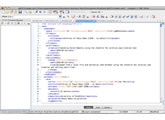
EAD files can be created by using a special XML-editor, or can be simply written as text files.  They are stored as text files, which means that large amounts of information can be stored in very little space.

EAD provides a software- and hardware-independent way of storing data, which makes it much easier to create data that different applications can share.

Content of descriptions

We have requirements that certain mandatory fields be completed.  This is to ensure that the necessary information – such as any access conditions - is available to users. However, excepting some requirements for certain formating, the content is up to you, as these are your descriptions.  

If you are using the Hub EAD Editor to create or edit your descriptions, you will easily be able to see which fields are mandatory, as they will be marked in red until completed.

Creating descriptions

You can use the Hub EAD Editor to:

  • type in a description from scratch
  • copy and paste from an existing description
  • upload an EAD file

The EAD Editor also has functionality that allows you to format and mark-up text, and create lists and hyperlinks through the use of right-click menus.

If you are copying from a word processing program, you will need to be aware that some characters (such as apostrophes) may not display correctly. We recommend that you save files as plain text files before copying them to avoid this problem. 

EAD files can also be created using XML (or text) editors, or by export from CALM and AdLib archival software, or from AIM25.

Other options for the creating of descriptions, or for converting current descriptions to EAD, may require you to investigate ways of mapping data. You may be able to get help from the EAD community.

What next?

Please contact us if you would like to contribute to the Archives Hub or have any further questions.


Alt text goes here