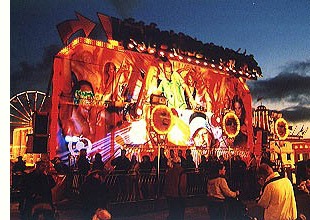
Fairs and circus history
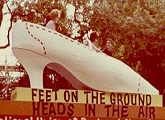
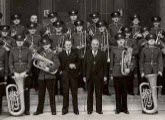
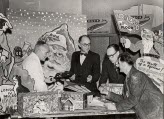
This month, October 2008, we're looking at two of the collections held at the National Fairground Archive in Sheffield. There are photos from the collections and also links to selected websites and some suggested reading about fairs and circus and fairground history.
The Malcolm Airey collection contains a large number of circus programmes both British and international and include examples of Billy Smart and Robert Bros. circuses among others. There are programmes from touring shows which travelled the length and breadth of the UK and also from circuses in permanent structures such as the Blackpool Tower circus. The programmes date from the early 1940s until early 2000 and list a variety of acts that graced the circus ring, showing the change and development as the years progressed.
October 11th, or the Friday nearest to it is the official date for Hull Fair, the biggest and one of the oldest fairs in Europe. For two weeks, the streets of Hull are taken over by a huge amount of rides and stalls. In the 18th century the fair was dominated by jugglers, theatrical booths and puppet shows while from the early 19th century the famous Wombwell Menagerie show appeared, which introduced the people of Hull to their first sights of wild animals. The introduction of mechanisation in the 1870s brought new life to the fair and in a period when many historic fairs were lost with the passing of the Fairs Act in 1871, the people of Hull remained loyal to their annual feast. During the 1800s the fair was held at a variety of locations ranging from the Market Place to Brown Cow Field outside the town; it eventually moved to Park Street in 1865 on the Corporation Field. In 1888 Hull Fair moved to its present home on Walton Street, with the original site doubling in size in 1906 to sixteen acres, making it the largest fair in England at that time.
The last century has seen many changes at Hull Fair with each year bringing new and wondrous delights for those who attend the annual carnival. Fashions come and go on the fairground with the showpeople keeping one step ahead of their competitors and vying with each other to bring the latest attraction to the October Fair.
The National Fairground Archive commenced a major project documenting the history of the Hull Fair from the point of view of the local people and the showmen who attend.
- Jane Donaldson, Senior Library Assistant, National Fairground Archive, The University of Sheffield.
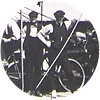
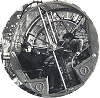
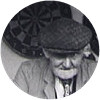



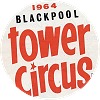
Images copyright © Surrey History Centre; Jack Leeson; Heather Hughes;
National Fairground Archive. All courtesy of the National Fairground Archive
Collection descriptions
- The Malcolm Airey Collection contains a large number of circus programmes from both the UK and Europe including Billy Smart and Belle Vue.
- The Hull Fair Project was conducted with funding from The Heritage Lottery Fund (HLF) and contains many images which are available to view in the reading room.
- Harold Dever: a collection of over 300 photographs of rides, engines, shows and acts from a variety of fairs and shows.
- Jack Leeson: over 11,000 photographs and negatives, both collected and taken by Leeson, and notebooks with detailed lists of every fair visited.
- Ron White: collection of digitised photographs of Scottish fairs
- Stanley Houghton (1881-1913): playwirght whose most famous work Hindle Wakes, 1912, has been filmed several times; the story includes a trip to Blackpool.
Related links
- National Fairground Archive: inaugurated by the Vice Chancellor of the University of Sheffield in 1994, with the support of the Showmen's Guild of Great Britain and the Fairground Association of Great Britain. Housed in the Western Bank Library, it is a unique collection of photographic, printed, manuscript and audiovisual material covering all aspects of the culture of travelling showpeople, their organisation as a community, their social history and everyday life; and the artefacts and machinery of fairgrounds.
- Hull Fair Project: conducted with funding from The Heritage Lottery Fund (HLF) and contains many images which are available to view in the reading room (University of Sheffield)
- Admission all classes: a series of events based upon research about the history of fairground, music hall, circus and sea-side entertainments (Blackpool, Lancashire)
- The Belle Vue archives: are held at Chetham's Library, Manchester
- Circus Friends Association: founded in 1934 to "stimulate and foster enthusiasm for reputable circus as a popular entertainment"
- The Fairground Association of Great Britain: founded in 1978, and the UK's leading club for fairground enthusiasts.
- Showmen's Guild of Great Britain: founded in 1899 to protect the interests of travelling showmen who gain their livelihoods by attending funfairs.
- Dingles Fairground Heritage Centre: fairground history: exhibits, vintage engineering and stunning artwork displays (Lifton, Devon)
- Hollycombe Steam Collection: unique collection of working steam-powered attractions (Hollycombe, Hampshire)
- Search the British Library Sound Archive catalogue for "fairground organs", "travelling fairs" or "fairgrounds--reminiscences".
- Hindle Wakes details of the film directed by Maurice Elvey, 1927 (IMDB website); this is one of the film versions based on the stage play by Stanley Houghton (1881-1913).
- Hindle Wakes: video clips from the film directed by Victor Saville, 1931 (bfi screenonline website) [requires Windows Media Player and available only to registered libraries]
- O Dreamland: 1956 film by Lindsay Anderson (1923-1994), a tour of the Margate funfair Dreamland; view complete 12-minute film (bfi screenonline website) [requires Windows Media Player and available only to registered libraries]
Suggested reading
Links are provided to records on Copac for these items. Copac is the free, web based national union catalogue, containing the holdings of many of the major university and National Libraries in UK and Ireland plus a number of special libraries. For more information about accessing items see the FAQs on the Copac website.
- Ferris wheels: an illustrated history by Norman D. Anderson, 1982. Records on Copac
- Fairground Architecture by David Braithwaite, 1968.Records on Copac
- Fairground strollers and showfolk by Frances Brown, 2001. Records on Copac
- "Come to the fair": The story of British fairgrounds and the showmen who attend them by F. C. Roope, 1961. Records on Copac
- A History of the Circus by George Speaight, 1980. Records on Copac
- Vintage funfairs: amusement rides, carousels and fairground art by Brian Steptoe, 2002. Records on Copac
- Victorian Arena: The Performers by John Turner, 1995. Records on Copac
- Hull Fair - fun for all: an illustrated history of Hull Fair in the 20th century by Vanessa Toulmin, 1999. Records on Copac
- Pleasurelands, a history of fairgrounds by Vanessa Toulmin,
2003. Records
on Copac
You
can receive regular updates on our special features by joining our
mailing
list.
Archives Hub Blog: The
Big Draw 2008: The Big Wheel.